Tag: tooth whitening

Opalescence

Types of Teeth Whitening Methods

Opalescence® Teeth Whitening

Opalescence is a well-known take home bleaching system and the first ADA accepted, syringe delivered, take-home bleaching gel. The patented formula has unique sticky and adhesive properties, which produce teeth whitening results in days rather than weeks.

Previous to the Opalescence home bleaching gel, home bleaching was tedious and time consuming, with varying levels of patient acceptance. The active ingredient in Opalescence teeth whitening gel is carbamide peroxide. Opalescence PF carbamide peroxide based gels come in strengths of 10%, 15%, and 20%. The PF denotes the use of fluoride and potassium nitrate, which are added to reduce whitening sensitivity.

The safety and effectiveness of Opalescence home bleaching gel is unsurpassed. The Opalescence teeth whitening system has been shown to be effective for removing some or all of the internal tooth discoloration due to congenital, systemic, pharmacologic, traumatic factors and aging. It has also proven effective with certain cases of fluorosis and tetracycline staining.

Opalescence teeth whitening is recommended for discolored teeth prior to placement of composite, veneers, crowns or bridges as porcelain and other restorative materials will not whiten.

Unlike other home bleaching gels, the Opalescence is a sticky formula that does not leak from the home bleaching tray . Patients experience teeth whitening results quickly which leads to high treatment compliance. A university study proved that the Opalescence home bleaching gel can be active for 8-10 hours for overnight home bleaching.

The Opalescence home bleaching gel has an estimated shelf life of 24 months if kept refrigerated and 12 months un-refrigerated.

Other ranges of Opalescence Teeth Whitening aside from its well-established home bleaching gel include:

  • Opalescence® Boost Teeth Whitening : high concentration of peroxide done at the dentist office
  • Opalescence® Go : Basically an over-the-counter home bleaching kit that comes with a general mouthcase instead of a customized mouthcase if choosing Opalescence home bleaching prescribed at you’re dentist office.
Opalescence® Teeth Whitening

Related Pages:

Home Bleaching Kits

Types of Teeth Whitening Methods

Home Bleaching Kits

Home bleaching solutions are products that contain peroxide that bleaches the tooth enamel. These whitening products typically rely on percentages of carbamide peroxide as the bleaching agent that comes in several different concentrations. The lower the peroxide percentage, the longer it may safely remain on teeth. The whitening gel is applied to the teeth using custom-made home bleaching trays that resemble mouth guards

Peroxide-containing tooth bleaching kits typically come in a gel and are placed in a mouthguard. Usage regimens may vary. Mos home bleaching kits are used overnight use for 1-2 weeks.

Professionally Dispensed Take-Home Whitening Kits

are done at your tooth whitening dentist’s office. Your tooth whitening dentists takes an impression in having a custom-fitted tooth bleaching mouthguard that fit your teeth precisely.

Over-the-counter Whitening Kits

involves a whitening bleaching gel with a concentration lower than that of the professionally dispensed take-home whiteners that is applied to the teeth via one-size-fits-all trays, whitening strips or paint-on applicators. In many cases this may only whiten a few of the front teeth unlike custom trays that can whiten the entire front smile.

Advantages of Home Bleaching

  1. Home tooth whitening kits repeated on a regular basis, preferably every four to six months, help maintain your whitened teeth.
  2. Home tooth whitening kits allows a choice of whitening trays, strips or paint-on products, as well as numerous whitening accoutrements.
  3. Home tooth whitening kits provides convenience and can be done at any time of the day or night
  4. Home tooth whitening strips is portable and can also be used at any place
  5. Over-the-counter teeth whitening products normally more economically priced then in-office teeth whitening

Disadvantages of Home Bleaching

  1. home bleaching kits requires more time normally placed overnight every night of the week to achieve results

Home Bleaching Whitening Kits

Click on each of the home bleaching systems to read more about each brand :

Home Bleaching Systems
Product Company
Opalescence UltraDent
Zoom DayWhite & NightWhite Philips
LumiBrite  Den-Mate
Niveous Shofu Dental
Captivate NUPRO  Dentsply Sironia I

Zoom Tooth Whitening

Types of Teeth Whitening Methods

Zoom Tooth Whitening

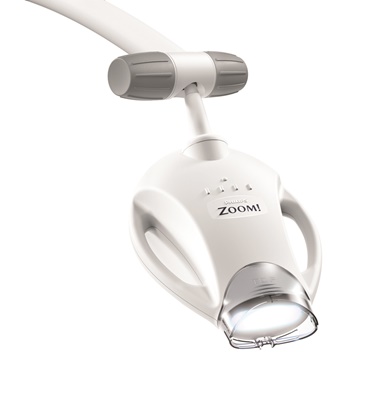
Zoom! tooth whitening is safe, effective and fast. Zoom! teeth whitening has been shown to be the #1 system by an independent dental research company and is featured on the popular television program ‘Extreme Makeover’.

The Zoom! gel was originally developed by Discus Dental that established brands including Zoom, BriteSmile, and NiteWhite. In 2010, Discus Dental was acquired by Philips. The popular BriteSmile teeth whitening subsequently ceased production. NiteWhite and Zoom whitening gel integrated into today’s Phillips Zoom Whitespeed whitening.

The Zoom tooth whitening gel is scientifically formulated, and when activated, gently penetrates teeth to remove deeps stains and discoloration. Research and studies have indicated that tooth whitening teeth under the supervision of a dentist is safe and considered one of the safest cosmetic dental procedure available.

How does Zoom! Tooth Whitening works?
The Zoom light-activated tooth whitening gel’s active ingredient is  Hydrogen Peroxide (H2O2).  As the hydrgen peroxide is broken down, oxygen enters the enamel and dentin, whitening colored substances while the structure of the tooth remains unchanged.  The Zoom light aids in activation the hydrgen peroxide in penetrating the surface of teeth.

What is the difference between zoom and zoom2 tooth whitening?

Discus Dental Inc. developed Zoom2, the “second generation” of the popular Zoom! Chairside Whitening System. Zoom2’s improvements and innovations includes:

  • Faster Chairside Whitening : 45 minute with instant-on light with no warm-up time
  • Easier : Advanced Optical Guidance System, Ergonomic Rolling Lamp
  • More Comfortable: Light & Gel Enhance Patient Comfort, ACP & KNO3 Technologies
  • Superior Clinical Performance : Eight Shades with patients being sensitivity-free

A study has shown that use of the Zoom2™ lamp increases the effectiveness of the Zoom! gel by 26% more, giving an average improvement of eight shades. The Zoom2 system also reported 73% less transient tooth sensitivity than the original Zoom! tooth whitening system.

Read clinical whitepaper on Zoom2! clinical study.

Zoom Tooth Whitening

In recent years, after the acquirement of Discus Dental by Philips Zoom, Zoom2 whitening gel was re-packaged and re-named by Philips as Zoom Whitespeed whitening.

Related Pages:

In Office Whitening

Types of Teeth Whitening Methods

In-office Whitening

In-office bleaching or dentist whitening allows significant color change to be accomplished within in a short time span of only one hour or so, making it major benefit of professional whitening.

During in-office tooth whitening, the tooth whitening dentist applies a protective gel to your gums or a rubber shield to protect the oral soft tissues.  A relatively high-concentration peroxide gel is then carefully applied to the teeth by the tooth whitening dentist. Generally, the peroxide remains on the teeth for several 15 to 20 minute intervals, a special light (such as laser light or plasma arc light) is used to enhance and activate the action of the tooth whitening agent.

For individuals with particularly stubborn staining may be advised to return for one or more additional tooth whitening sessions, or may be asked to continue with a home whitening kit.

Advantages of In-Office Whitening

  1. Professional tooth whitening is a safe form of tooth bleaching
  2. Gum and tooth sensitivity are more controllable today due to thicker peroxide gels and the use of desensitizers such as potassium nitrate and fluoride.

Disadvantages of In-Office Whitening

  1.  In-office bleaching is more expensive than take-home bleaching alternatives.
  2. In-office bleaching is not a permanent solution. After the one hour whitening treatment is completed, teeth do still resume accumulating stains. Many dentists therefore recommend the home bleaching maintenance kits with a follow-up lower-percentage bleach

Types of In-office Tooth Whitening

Whitening teeth with in-office teeth whitening is determined by the concentration of peroxide in the whitening agent and the amount of time the whitening agent is placed on the surface of teeth. For teeth to whiten, teeth need to be exposed to an appropriate teeth whitening agent for an appropriate amount of time. Below are some popular chairside tooth whitening brands and the different light sources utilized.

Click on each of the below in-office teeth whitening systems to find out more about each brand:

Tooth Whitening Systems
Type of Light Source
Zoom! Metal Halide Light
Zoom WhiteSpeed LED Light
Zoom QuickPro No Light
Pola Plasma Arc/LED Light/No light
LaserSmile A Biolase Laser
Opus 10 A Opus Laser
Beyond Gas Plasma Light
BriteSmile Gas Plasma Light / Light Emitting Diode
Rembrandt Plasma Arc Light
Sapphire Plasma Arch Plasma Arc Light
LumaCool Halogen Light
Captivate NUPRO  No Light
Opalescence No Light
Niveous No Light
LumiBrite Plasma Arc / No Light

There are also many other LED Light based teeth whitening systems including Mega Light, LITEX, LumaCool, Cyrstal teeth whitening and plasma arch teeth whitening such as Ultra-lite teeth whitening.

Many of above same in-office teeth whitening systems also carry a take-home tooth whitening kits version for patients to bring home for touch-up or follow on treatment.

In-office tooth whitening procedure

During your in-office professional teeth whitening systems using light-activate gels, the individual teeth whitening steps are very simliar varying simply with the bleaching light used to activate the teeth whitening gel.

  1. Checkup on whether in-office teeth whitening is suited for individual
  2. Scaling/cleaning/polishing (if opted)
  3. Evaluate the individual’s pre-whitening treatment tooth shade
  4. Isolate those teeth being to be teeth whitened with dam
  5. Place eye protection
  6. Apply peroxide teeth whitening gel onto the surface of teeth
  7. Activate tooth whitener with tooth whitening light (if required)
  8. Teeth whitener is left on teeth for period of time and done in cycles for certain tooth whitening treatments
  9. Dam and gel is removed and cleaned
  10. Evaluate the individual’s post-whitening treatment tooth shade

Why Whiten Teeth

Bangkok Tooth Whitening in Thailand

Why Whiten Your Teeth

Most of us start out with sparkling white teeth with porcelain-like enamel surface. Tooth enamel is composed of microscopic crystalline rods designed to protect the teeth from the effects of chewing, trauma and acid attack. Over years of use, enamel then becomes worn down, becoming more transparent and permitting the yellow color of dentin, that is the toothís core material, to show through.

During routine chewing, dentin remains intact while micro-cracks occur in the enamel. These cracks gradually fill up with stains and debris. As a result, the teeth eventually develop a dull, lackluster appearance.

Teeth bleaching removes the stains and debris, leaving the enamel cracks open and exposed. Some of the cracks are quickly re-mineralized by saliva, while others are filled up again with organic debris.

What Causes Tooth Staining?

Age: Over the years, teeth darken due to wear and tear and stain accumulation. In general, younger aged individuals will likely experience immediate, dramatic results from teeth-bleaching. For individuals their twenties, the teeth may begin to show a yellow cast, teeth-bleaching may require a little more effort. By around forties, yellow teeth may start turning to a brownish tone and more maintenance may be called for. By the fifties, the teeth have absorbed a host of stubborn stains which can often be difficult to remove.

Starting color: Each individaul has an inborn tooth color that ranges from yellow-brownish to greenish-grey, and intensifies over time. Yellow-brown is generally more responsive to teeth-bleaching than green-grey.

Translucency and thiness: Most teeth has some translucency in them. Teeth that are opaque and thick normally have an advantage: they appear lighter in color, show more sparkle and are responsive to tooth-bleaching. For teeth that are thinner and more transparent, there is less of the pigment required for tooth-bleaching. According to cosmetic dentists, transparency is the only condition that cannot be corrected by any form of teeth bleaching.

Eating habits: The habitual consumption of coffee, tea, wine, cola, carrots, oranges and other deeply-colored beverages and foods causes staining over the years. Acidic foods such as citrus fruits and vinegar can also contribute to teeth enamel erosion. As a result, teeth surface becomes more transparent and more yellow-colored dentin shows through.

Smoking habits: Nicotine leaves brownish deposits which slowly soak into the tooth structure and cause intrinsic discoloration.

Drugs / chemicals: Tetracycline usage during tooth formation produces dark grey or brown ribbon stains which are very difficult to remove. Excessive consumption of fluoride causes fluorosis and associated areas of white mottling. .

Grinding: Teth grinding due to gnashing, bruxing, stress or other reasons can add to micro-cracking in the teeth and can cause the biting edges to darken.

Trauma: Falls and other injuries can produce sizable cracks in the teeth, which collect large amounts of stains and debris.

Tooth Discoloration: The Two Types of Tooth Stains

There are two categories of teeth staining as it relates to the teeth: extrinsic staining and intrinsic staining.

Extrinsic stains appear on the surface of teeth due to exposure to dark-colored beverages, foods and tobacco, and routine wear and tear. Superficial extrinsic stains are minor and can be removed with brushing and prophylactic dental cleaning. Stubborn extrinsic stains can be removed with more involved efforts, like teeth bleaching. Persistent extrinsic stains can penetrate into the dentin and become ingrained if they are not dealt with early.

Intrinsic stains form on the interior of teeth. Intrinsic stains result from trauma, aging, exposure to minerals/drugs/chemicals during tooth formation and/or excessive ingestion of fluoride. In the past, it was thought that intrinsic stains were too resistant to be corrected by tooth bleaching. Today, cosmetic dentistry experts believe that even deep-set intrinsic stains can be removed with supervised take-home teeth bleaching that is maintained over a matter of months or even a year. For such cases, it would be best to check with your teeth bleaching dentist.

Tooth Whitening Reviews

Teeth Whitening Dental Clinics in Thailand

Tooth Whitening Reviews

No post found

Have you had tooth whitening done in Thailand that you would like to share with others. Please do feel free to email us at bangkokdentalcenter@hotmail.com in sharing your feedback with other

Teeth Whitening Dentists

Teeth Whitening Dental Clinics in Thailand

Ask Your Thailand Teeth Whitening Dentist

Please do feel free to drop us a note on any questions you might like to ask with our  tooth whitening experts and dentists at our Thailand Tooth Whitening Dental Clinics.

Veneers Whitening Dentists

Dr. Vichulada Phunthikaphadr DDS., MSc.,

  • DDS., Chulalongkorn University
  • Certificate in Restorative Dentistry, University of Michigan. Ann Arbor, USA
  • Master Degree in Restorative Dentistry, University of Michigan. Ann Arbor, USA
  • Master Degree in Endodontics, Mahidol University
  • Certificate in Lumineers

Dr. Nontapan Teppanich DDS.,

  • DDS., Srinakharinwirot University
  • Graduate Diploma in Clinical Sciences Degree (Prosthodontics), Chulalongkorn University

Dr. Suthida Tunsiriroongruang DDS., MSc.,

  • DDS., Srinakharinwirot University
  • MSc., Clinical Sciences, Chiang Mai University

Dr. Sarinya Aekpitakdamrong DDS.,

  • DDS., Prince of Songkla University
  • Certificate in Aesthetic Dentistry
  • Ex-Lecturer in Operative Dentistry at Prince of Songkla University

Dr. Jutarmart Chanasriyotin DDS., MSc.,

  • DDS., Srinakharinwirot University
  • MSc., Clinical Sciences, Chiang Mai University

Dr. Kittima Siripanich DDS.,

  • DDS., Chulalongkorn University
  • Certificate in Esthetic Dentistry, University of California of Los Angeles (UCLA), USA

Dr. Natchaya Wattanakongtong

  • DDS., Chulalongkorn University
  • Graduate Diploma in Clinical Sciences Degree (Operative), Chulalongkorn University

Dr.Chatsuda Pawasoottiku

  • DDS., Chulalongkorn University
  • MSC., in Prosthodontics,Chulalongkorn University

Dr. Soontharaporn Wongsirikul DDS.,

  • DDS., Prince of Songkhla University
  • Diploma in Clinical Dentistry, The University of Adelaide, Australia

Teeth Whitening Dentists

Dr. Auraiporn Lovakit DDs.,

  • DDS.,Chulalongkorn University

Dr. Jareeporn Satthasuk

  • DDS., Chaing Mai University

Dr.Mueanjan Lertviwatkul DDS.,

  • DDS., Chulalongkorn University

Dr.Vasapran Watanasuwan DDS.,

  • DDS., Srinakharinwirot University

Dr.Chaiyapol Chaweewannakorn DDS.,

  • DDS., Mahidol University

Teeth Whitening Clinics

Teeth Whitening Dental Clinics in Thailand

Teeth Whitening Dental Clinics in Thailand

Many dental clinics in Thailand have promotional prices for tooth whitening treatment advertising lowest in town or a beats all prices marketing scheme. It is good practice to on check whether the dental clinic do actually use genuine tooth whitening treatment brands and genuine tooth whitening machines as they market corresponding to their tooth whitening treatment fees.

Certain dental clinics may have clauses such as payment only in cash for taxation avoidance or have hidden costs charged during consultation, checkup or at the final treatment fees that you may like to check prior to your tooth whitening treatment.

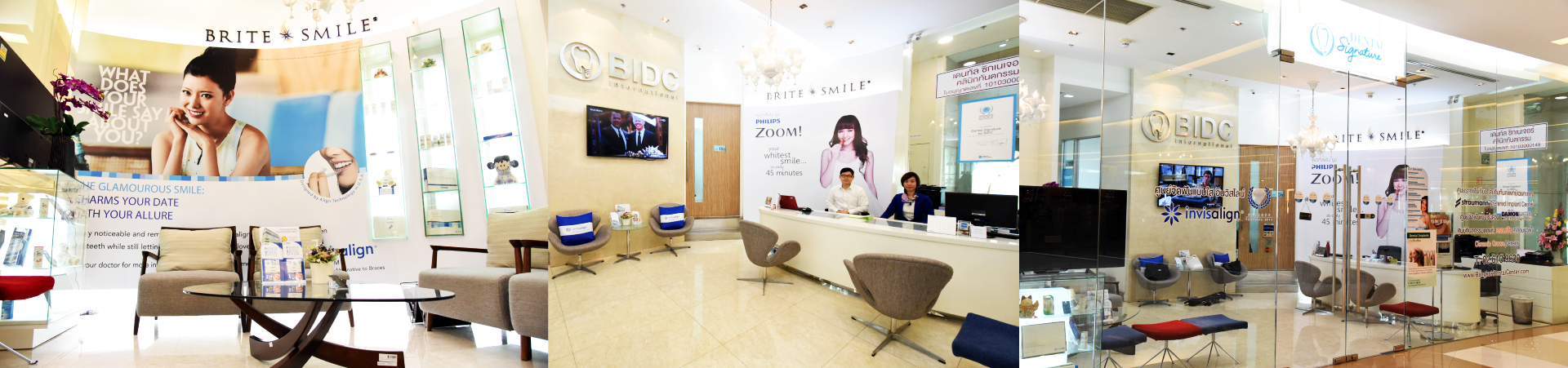
At BIDC teeth whitening clinics in Thailand, payment may be made in both thai baht cash or credit cards with no hidden taxation or credit card surcharges. Transparent pricings for tooth whitening treatments prices and teeth whitening promotions are assured at our dental clinics

Opening Hours


Monday to Saturday Sundays
Bangkok International Dental Center (BIDC) Ratchadapisek 9.00 to 20.00 9.00 to 17.00
BIDC at Emquartier Dental Clinic 10.00 to 20.00 10.00 to 17.00
BIDC at Siam Paragon Dental Clinic 10.00 to 20.00 10.00 to 17.00
Bangkok International Dental Hospital (BIDH) Ploenchit 9.30 to 20.00 9.30 to 17.00
Phuket Dental Signature at Patong 10.30 to 20.00 10.30 to 17.00
Chiangmai International Dental Clinic (CIDC) 9.00 to 20.00 9.00 to 17.00

Bangkok International Dental Center (BIDC)

157, 159 Ratchadapesik Rd. Din Daeng District
Bangkok 10400 Thailand

Tel: +66 (0) 2 692-4433 (BIDC)
Fax: +66 (0) 2 248 6196
Email : contact@bangkokdentalcenter.com
Website: www.bangkokdentalcenter.com

BIDC at Emquartier Dental Clinic

EmQuartier shopping center 4th floor, Building A. EmQuartier Shopping Complex
693 Sukhumvit road, Klongton-Nue, Wattana, Bangkok, Thailand 10110

Tel :0972959872
Email : eq@bangkokdentalcenter.com
Website : dentalsignature.com

BIDC at Siam Paragon Dental Clinic

Siam Paragon Mall, 2nd Floor,
Room 238 North Colonnade (opposite Asia Books)
Rama 1 Rd.,Pathumwan, Bangkok 10330 (at BTS Siam Station)

Tel : +66 (2) 610 9630 (Bookings)
Tel : +66 (2) 610 9633 (Alternate)
Email : ds@bangkokdentalcenter.com
Website : dentalsignature.com

Phuket Dental Signature at Phuket

Phuket Dental Signature at Phuket
189 Rat-U-Thit 200 Road Patong, Kathu, Phuket 83150, Thailand
Tel : +66 76-341-700
Mobile : +66 91-889-6199
Email : phuket@bangkokdentalcenter.com

bangkok dental hospital

BIDH Dental Hospital

98 Sukhumvit Soi 2, Khlong Toei,
Ploenchit area, Bangkok 10110
Entrance via both Soi Duang Phithak Rd and Sukhumvit Soi 2
Mobile : +66 95-517-1587
Email : contact@dentalhospitalthailand.com

Chiangmai International Dental Clinic

Chiangmai International Dental Clinic (CIDC)

11 Nimmanahaemin Soi 3 Nimmanahaemin Rd,
Suthep, Muang District, Chiang Mai 50200

Tel : +66 52-089-323 (Bookings)
Tel : +66 52-089-322 (Bookings)
Mobile: +66 95-517-5782
E-mail : contact@chiangmaidentist.com
Website : chiangmaidentist.com

Post Care Instructions

Bangkok Tooth Whitening in Thailand

Teeth Whitening Post Care Instructions

After teeth whitening, post care for your newly whitened teeth include:

  1. avoiding dark-colored foods and beverages as well as smoking for at least a week after whitening. Whenever possible, sipping dark-colored beverages with a straw.
  2. practicing good oral hygiene, brushing and flossing after meals and at bedtime
  3. follow-up or maintenance whitening when color shades start to fade

Tooth Whitening sensitivity

Tooth bleaching can cause a temporary increase in tooth sensitivity to temperature, pressure and touch. Some individuals experience spontaneous shooting pains or “zingers” down the middle of their teeth.

Individuals at greatest risk for whitening sensitivity are those with gum recession, significant cracks in their teeth or leakage resulting from faulty restorations.

Whitening sensitivity normally lasts no longer than a day or two, but in some cases whitening sensitivity may persist up to a month. If so, toothpaste containing potassium nitrate for sensitive teeth may be recommended for use.

If there is whitening sensitivity in teeth post tooth whitening treatment , there are several ways in reducing whitening sensitivity in teeth:
a) avoid acidic and citrus drinks and spicy foods as well as extreme hot or cold temperature foods
b) use toothpaste for sensitive teeth
c) take pain relieve medication where necessary

Teeth Whitening Costs

Thailand Teeth Whitening Promotions

Thailand Teeth Whitening Promotions

Tooth whitening costs varies with the different types of tooth whitening brands. To maintain our high sterilization controls and patient monitoring safety a 150 to 250 baht per visit charge for sterilization fees and/or nursing screen will therefore appears in your fees for BIDC. We welcome our patients to view our tightly controlled and highly monitored sterilization areas at BIDC on request.

Treatment Type
Unit
Price in
Thai Baht
Price in USD (approx)
No. of Visit(s)
Estimated Duration of Stay (Days)
In-office Whitening
Zoom™ Tooth Whitening
case
9,000 ( Promotion )
250
1
1
Pola Tooth Whitening
case
7,000
195
1
1
Treatment Type
Unit
Price in
Thai Baht
Price in USD (approx)
No. of Visit(s)
Estimated Duration of Stay (Days)
Take Home Tooth Whitening
opalescence
case
5,000
139
1
1
Treatment Type
Unit
Price in
Thai Baht
Price in USD (approx)
No. of Visit(s)
Estimated Duration of Stay (Days)
Veneers Tooth Whitening
Porcelain Veneer : IPS Esthetics
veneer
13,000
361
2-3
3-7
Porcelain Veneer : IPS eMax ( 1-4 teeth)
veneer
16,000 ( Promotion )
444
2-3
3-7
Porcelain Veneer : IPS eMax ( >5 teeth)
veneer
15,000 ( Promotion )
417
2-3
3-7
Porcelain Veneer : Premium High Transluency + Digital Smile Design veneer 17,000 ( Promotion ) 472 2-3 3-7
Super-thin Veneers veneer 18,000 ( Promotion ) 500 2-3 3-7
Composite Veneers
veneer
5,000-6,000
139-167
3-4
14
Treatment Type Unit Price in Thai Baht
Teeth Whitening Fees
Zoom!™ Tooth Whitening
Case
9,500
(from 15,000)
Home Tooth Bleaching
Case
5,500

Package rates are applicable now till 31 May 2026.

Payment Channels

Payment Channels

The above prices are subject to changes without prior notice. All treatment fees are charged in THB (thai baht). For treatment fees in your currency, treatment fees will be based on daily exchange rate.

The above dental treatment fees are valid for standard cases in general. For complex cases with high level of difficulty, the dental treatment fees may be subject to price variations upon an initial examination with our dental specialist. Treatment fees with ranges vary by complexity of case and amount/price of gold used in prosthetic dental works. Read our Terms of Warranty.